Lovely Lemons are in season, and anyone with a lemon tree where we live has them ripening profusely on the tree. I thought it was time to assemble my favourite lemon recipes together for you. Everyone of them is tried and true, and they are my go to at this time of year.
Showing posts with label lemons. Show all posts
Showing posts with label lemons. Show all posts
Wednesday, April 29, 2026
Some of my favourite Lemon Recipes


Wednesday, February 18, 2026
Zucchini and Ricotta Gnocchi with Lemon Sauce

This gnocchi recipe is based on creamy Ricotta Cheese and Zucchini instead of the usual potato, resulting in dumpling treats that are slightly richer in flavour, and with the added bonus of a delicious lemon sauce. Gnocchi is an Italian family food favourite and might just be your new favourite as well.
Thursday, August 21, 2025
The Lemon Bar Slice

I thought about calling this a Lemon Curd slice because the lemon topping tastes just like delicious lemon curd to me. If you love the tangy and sweet flavours of lemon curd, then you will adore this slice. However, as I didn't make the lemon topping the same way that I would make a batch of lemon curd, either in the microwave or on the stovetop, I thought it might be misleading. Despite the deliberation, here we have a beautiful lemon curd like topping on a crunchy biscuit base, all in one. What could be better?
Monday, March 17, 2025
Lemon Sago Dessert with a Sour Cream and Lemon Curd Topping
 |
Monday, April 17, 2023
How to make a self-saucing Lemon Delicious Pudding

Lemon Delicious Pudding is a very popular self-saucing pudding in Queensland, and after harvesting the first crop of the year of precious lemons from our potted tree, this was the first dessert I wanted to make with them. When I say first harvest, I mean 4 lemons. The recipe produces a luscious and creamy lemon sauce topped with a soft lemon flavoured sponge cake which is an absolute joy to eat. It is also a cinch to make.
Friday, May 13, 2022
Lemon Sour Cream Bundt Cake

My Lemon Sour Cream Bundt Cake is tangy with lemon flavours, and has a firmer texture to it, which is essential for a Bundt cake. Pouring lemon juice over the cake when hot from the oven is the final touch to ensuring very citrussy flavours, which we all love.
Saturday, March 12, 2022
In My Kitchen, March 2022
Let's start our day in the kitchen with a delicious breakfast. Large Portobello mushrooms can be prepared like toast, and that is just what I did with these. Only not toasted, but grilled. This is such an easy way to cook big, flat, fresh mushrooms. Mushrooms, goat's cheese, pine nuts, and freshly snipped chives from the garden, what's not to love about this vegetarian dish for a weekend brekkie? Add a little finely chopped garlic straight onto the mushrooms if you wish. This is also a perfect meal for a Meat Free Monday dinner served with a delicious salad. They also make a surprisingly "meaty" accompaniment to anything from a baked potato gratin to a grain salad.
Portobello Mushroom Toast with Goat's Cheese, Pine Nuts and Chives, a perfect breakfast treat
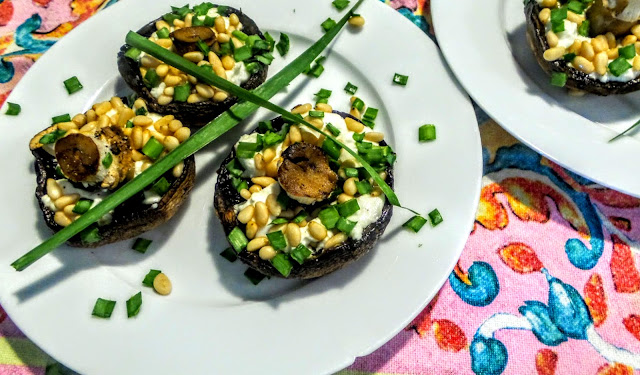
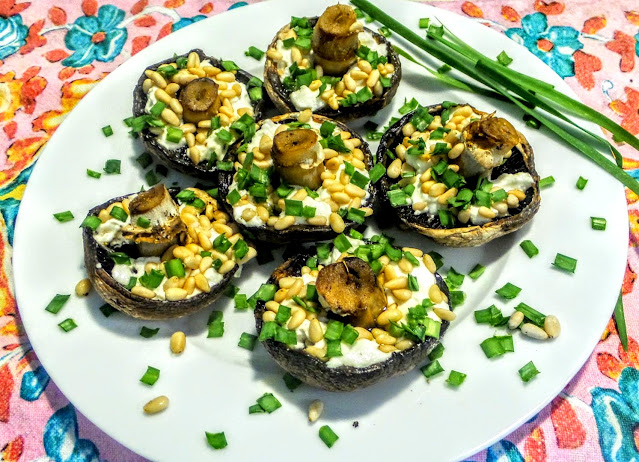
I try to cook mainly with vegetables that are in season, and cooking with mushrooms is an easy decision as they are available all year round now in our shops in the Southern Hemisphere. I hope it's the same for those of you in the Northern Hemisphere. I'll only buy them though, if they are available unpackaged, as I don't see why they often need to be so heavily packaged in plastic. Storing them in the refrigerator crisper in a brown paper bag is the most sensible storage option.
Portobello Mushroom Toast with Goat's Cheese, Pine Nuts and Chives
Ingredients:
Serves 2
4 Portobello mushrooms
Slurp of olive oil on each one
60 g soft goats cheese (Meredith Dairy soft goats cheese works well), or choose hard cheese
2 tablespoons pine nuts
2 handfuls of fresh chives, snipped
Method:
Turn the oven grill to high.
Place the mushrooms open side up on the baking tray, drizzle with the oil and season with a pinch of salt and plenty of black pepper.
Place under the grill for 3 minutes.
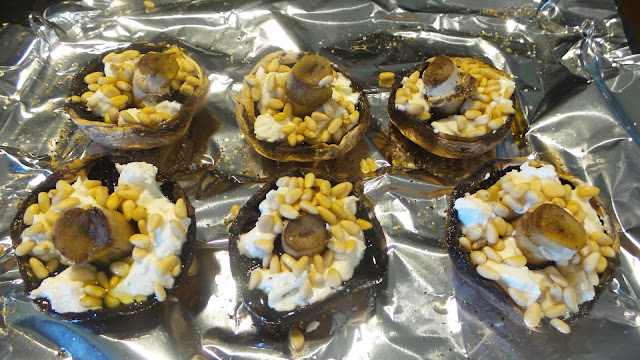
Remove the mushrooms from the grill, dot on the Goat's cheese and sprinkle with the pine nuts.
Place the mushrooms back under the grill for a further 2 minutes until Goats cheese is further softened and pine nuts are toasted. The pine nuts need to be watched as they will burn if left under the grill for too long.
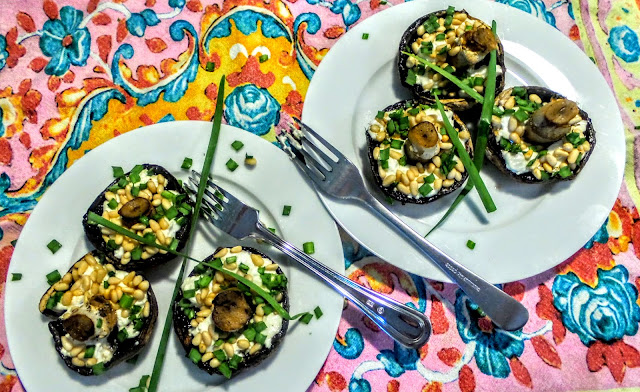
Sprinkle on the snipped chives to serve.
Served with homemade spicy tomato relish, or any savoury relish, in my opinion these rival any meal served in a cafe for brekkie. Add delicious bread on the side if you wish.
Beef stir-fry anyone?
Given the unbelievably high price of beef at the moment, and showing respect for the mission by many that we reduce our meat intake for the sake of our own health and for the health of the planet, I now think really seriously about how I'll prepare the meat that I buy. This beef stir-fry with a citrus kick was worth the little extra effort required to take it from the level of a quick "throw all in the wok" stir fry, to one with marinated very tender beef, and delicious flavours with a kick of lime. You can find the full post on the recipe at this link. I'll definitely be making this one again.
Beef Stir-fry with a Citrus Kick
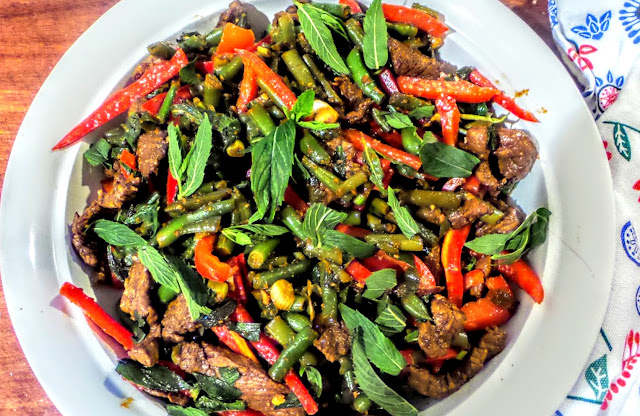
Recipe serves 4
Ingredients:
Preparation 15 minutes + 15 minutes marinating time. Cooking time: only 10 minutes because it's a quick stir fry.
400g - 500g rump steak, Scotch fillet, or even Sirloin steak, thinly sliced across the grain into 6 mm thick strips (marinating the meat will give very tender results). I used Rump steak.
2 tbs fish sauce
2 tbs soy sauce
2 tbs vegetable oil divided
1/4 tsp cornflour
1 red capsicum, seeded and thinly sliced
200g green beans, trimmed and halved diagonally
1/2 cup (70 g) thinly sliced shallots
1 tbs finely chopped garlic
1 tbs finely chopped ginger
1 cup coriander leaves, divided
1 cup mint leaves
1 lime juiced, divided
1 tbs sugar
Steamed rice to serve
Method:
- Prepare the fish sauce, soy sauce and sugar in a small bowl by whisking it until the sugar dissolves. Place the sliced beef in another medium sized bowl, add 1 tablespoon of the soy sauce mixture and mix the sauce into the meat. Set the bowl of meat aside for 15 minutes to absorb the flavours. I marinated mine for 2 hours, covered the bowl and stored it in the refrigerator, until ready to use, as I had the time to do that.
- Whisk the cornflour into the remaining soy sauce mixture and cover.
- Remove the beef from the bowl and pat it dry with a paper towel. Add 1 tablespoon of the vegetable oil to a large hot frying pan, and add the beef, spreading it over the base of the pan in a single layer. Without stirring the beef or touching it, cook for 2 minutes until well browned. You can see why the pan needed to be hot to begin with.
- Stir fry the beef, and continue to stir and fry it for 40 seconds until cooked through.
- Transfer the beef now to a plate with a rim to catch the juices.
- You are now ready to cook the vegetables.
- Add the remaining oil, (1 tablespoon), and the capsicum and beans and cook for 2 minutes until the vegetables soften slightly. Stir and fry the vegetables. You want them still quite crisp. Stir in the shallot, garlic and ginger,
- Add the remaining soy sauce mixture, and the beef and the juices to the pan with the vegetables. Stir and fry for 1 minute until the beef is just heated through, the vegetables are tender, and the sauce has thickened slightly.
- Take your frypan from the stove and stir in half the coriander leaves, the mint leaves, and the lime juice. I can't emphasize enough how important it is to add the lime juice and at least one of the herbs.
- To serve divide the rice among the serving bowls. Top the rice with the beef stir fry, and drizzle with the remaining lime juice and for presentation, sprinkle with the remaining mint and coriander leaves.
- Serve with extra lime wedges if you have them
Regardless of what else is happening, I always find time to read. During a very busy time while we were away in Cairns, this book by Australian author and doctor Joanna Nell, was an interesting and relaxing read. She navigated some of the politics in hospitals and how a dedicated group of volunteers found a way to deal with the bureaucracy. I enjoyed it.

There's a strong synergy between a lot of what we grow in our garden, and what I cook with in my kitchen. We try to grow as much as we can given space constraints, and the time of the year. Let's face it though, growing our own produce presents challenges, and there's a lot of trial and error with growing fruit and vegetables for our own use. However, growing what is suitable in our tropical climate is the key for us, that's not rocket science I know, even though at times we've tried growing a pomegranate tree, a finger lime tree (that should have grown well), vanilla bean vines, and other more exotic plants, but the pests and bugs can make life very difficult and know how to completely ruin our efforts. So here are a few photos of what we are having success with at the moment. These were taken before storms and showers over the last few days, and as I write this, Mr. HRK is out in the garden pruning and tidying up, and just enjoying the garden under slightly cooler conditions.
There's always a chilli bush or two growing in the garden, and it's great to be able just to pick them as needed for so many dishes I cook. If I had been in my own kitchen at home, I would have used one of these in the Beef stir-fry recipe above.
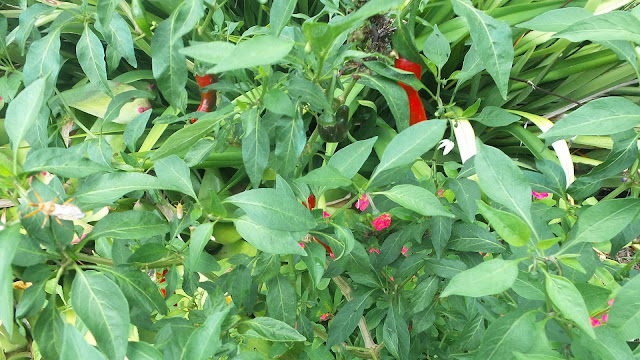
The odd bunch of chillies just picked. They still taste great though.

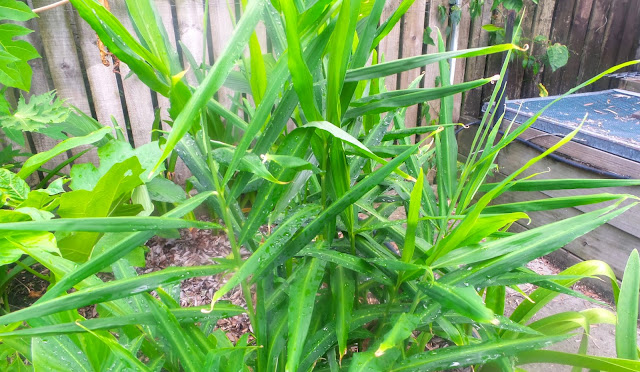
Edible ginger and turmeric thrive in the Summer garden in the tropics.
 |
| The lush turmeric is flowering, and the pineapple sage in front with the pink flowers |
Our edible ginger is looking very healthy after the rain and will be ready for harvesting quite soon, however in the meantime it's great to be able to dig some up when required.
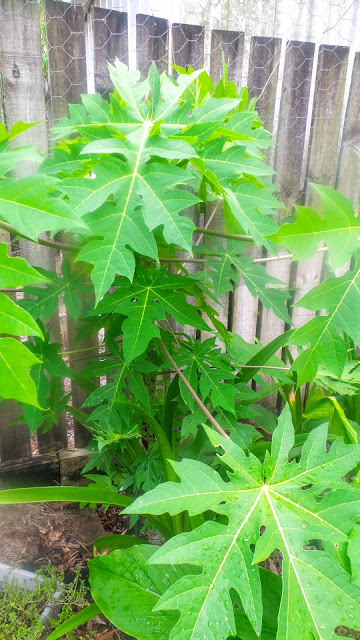
This Paw Paw tree below self seeded, so time will tell if it is bi-sexual, and actually bears fruit, or if it develops a disease such as bunchy top.I have high hopes for this one. Fingers crossed.
We have a cumquat tree, which is just beginning to flower. Can you see the small white buds on these two photos. I'm hoping that by the end of Winter there will be enough fruit to make some more


These are photos of some not so edible gingers growing in the garden, They bring beautiful colour, joy and biodiversity to our garden which is important.

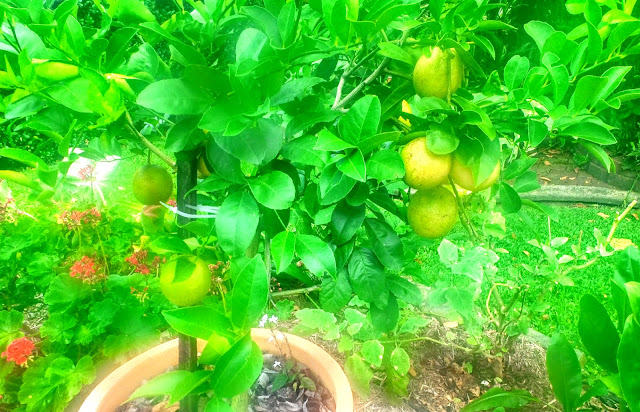
This very happy lemon tree was the subject of a recent post of mine. I used the first lemons to make some very nice little lemon puddings.


A new Market basket that I bought will be very useful, when I head off to market.
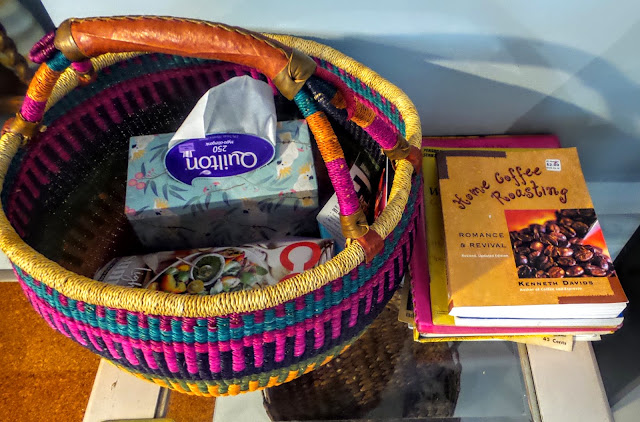
I made my first sourdough loaf of bread for quite a while. Now that the weathers a bit cooler I'll get back into more baking. Bread is such a staple, and sourdough bread is good for our wellbeing. I wish I could send some bread to the people left in the Ukraine, I doubt they are in a position to be making bread. It's all so sad.

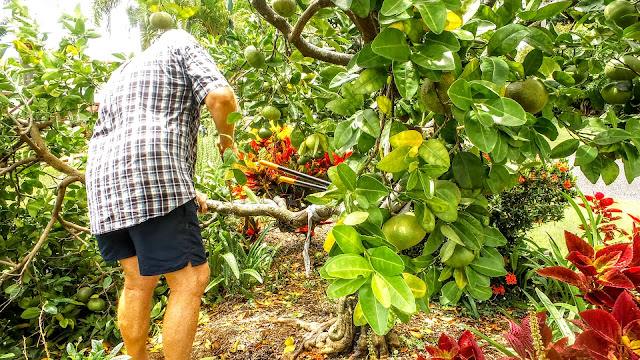
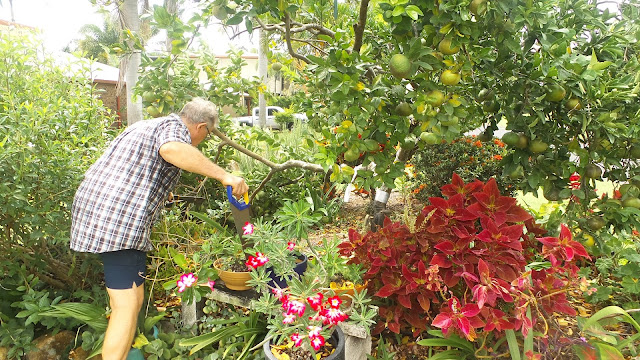
Hot off the press, we just discovered that our 15 year old Mandarin tree, was damaged during last night's storm. A large branch which is about 1/3 of the tree broke off. The tree is heavily laden with fruit, so we estimate about 100 mandarins were on that branch, and it was probably just the wind and the heaviness of the branch that caused it to break. So Mr. HRK has been busily sawing off the remaining branch. I am hoping I can salvage some of the green fruit to make jam or something else. Do you have any ideas? There is a hint of yellow on some of the fruit so they are beginning to ripen. If a cold snap comes during Winter, the remaining mandarins on the tree should be nice and sweet.
I am sending this post to Sherry of Sherry's Pickings for the In My Kitchen event. If you would like to join in, send your post to Sherry by 13th of the month. Or just head over to her blog to visit more kitchens.
cumquat marmalade. It's so delicious and a precious commodity.
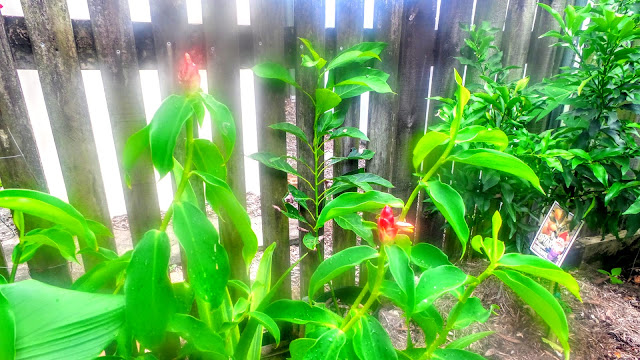 |
| This newly planted red ginger is growing in its own garden next to the cumquat tree. |
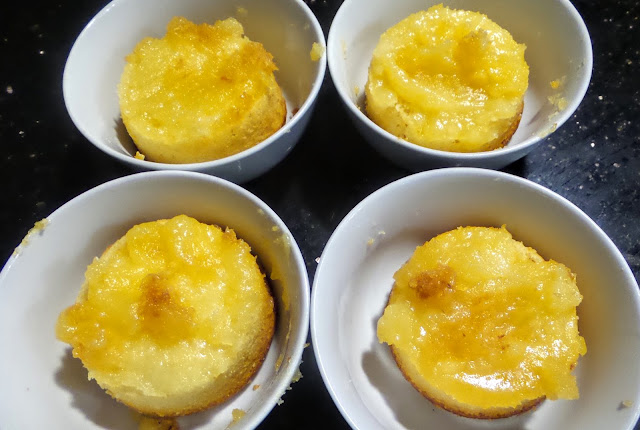 |
| Lemon puddings with a topping of homemade lemon curd. Yum! |
Our wonderful friends P & J, brought us back this bag of roasted coffee beans grown near Byron Bay. We are so excited about trying this coffee. They were in Ballina in New South Wales, and thankfully weren't trapped by the floods for too long as so many were.
I made my first sourdough loaf of bread for quite a while. Now that the weathers a bit cooler I'll get back into more baking. Bread is such a staple, and sourdough bread is good for our wellbeing. I wish I could send some bread to the people left in the Ukraine, I doubt they are in a position to be making bread. It's all so sad.
Hot off the press, we just discovered that our 15 year old Mandarin tree, was damaged during last night's storm. A large branch which is about 1/3 of the tree broke off. The tree is heavily laden with fruit, so we estimate about 100 mandarins were on that branch, and it was probably just the wind and the heaviness of the branch that caused it to break. So Mr. HRK has been busily sawing off the remaining branch. I am hoping I can salvage some of the green fruit to make jam or something else. Do you have any ideas? There is a hint of yellow on some of the fruit so they are beginning to ripen. If a cold snap comes during Winter, the remaining mandarins on the tree should be nice and sweet.
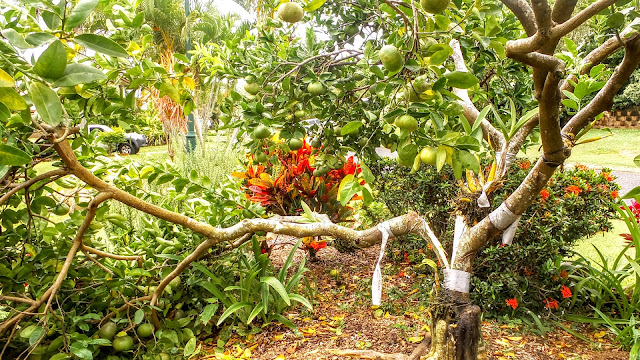 |
| The broken branch to the left |
I am sending this post to Sherry of Sherry's Pickings for the In My Kitchen event. If you would like to join in, send your post to Sherry by 13th of the month. Or just head over to her blog to visit more kitchens.
Watch this space for an update on our backyard Italian beehive, in a future post. There's been a lot of activity in the bee world in our back garden.
That's all for this edition my friends, there is work to do in the garden.
Have a nice weekend.
Warm wishes,
Pauline
Wednesday, March 9, 2022
Little Lemon Puddings

This lemon pudding dessert is the perfect finish to a delicious meal, tangy, lemony, citrussy, light and satisfying. My recipe celebrates the start of the lemon season for us from our backyard.
Sunday, August 8, 2021
In My Kitchen, August 2021
It's been a very good Winter for citrus this year, and we've been given bush lemons, limes and cumquats by friends which I've really appreciated, and which I've loved being able to cook with in various ways.

Lemon Delicious Pudding is a very popular self saucing pudding here, and I used a couple of the Bush Lemons I was given to make this during the week, however any lemons will be suitable. This recipe produces a luscious and creamy lemon sauce topped with a soft lemon flavoured sponge which is an absolute joy to eat. It is also a cinch to make. The recipe is straight out of the iconic Stephanie Alexander's cookbook, The Cook's Companion. Some Lemon Delicious Puddings don't create enough sauce for my taste, but this one does. It is also very easy to prepare quickly, and can be placed in the oven when the main course is resting. I love puddings that can be cooking while we are eating our main course, they are so easy to coordinate.
The Best Lemon Delicious Pudding recipe:
Ingredients:
Juice of 2 lemons and the zest of one
60 g butter
1 1/2 cups castor sugar
3 eggs, separated
3 tablespoons self-raising flour
1 1/2 cups milk
Method:
Preheat the oven to 180 deg. C. and butter a 1 litre ovenproof basin or serving dish.
Zest 1 lemon and juice both.
In a food processor, cream the butter with the zest and the sugar, then add the egg yolks.
Add the flour and milk alternately to make a smooth batter.
Scrape the mixture from the side of the processor bowl and blend in the lemon juice.
Tip all of this mixture into a bowl.
In a separate dry bowl whisk the egg whites until firm and creamy and fold them into the prepared basin.
Stand the basin in a baking dish and pour in hot water so that it comes halfway up the sides of the basin.
Transfer the basin and dish carefully to the oven and bake for 1 hour. Check it however after 45 minutes, and when the sponge is browned and firm to the touch, it is cooked.
Serve when it has cooled slightly.
It is delicious served with ice cream or pouring cream.

I posted the recipe for my microwave lemon curd recently and here is the link to that if you missed it. I've frozen a couple of bottles which should last 12 months in the freezer, and I made these lemon curd tartlets using some bought sweet pastry shells for convenience, and decorated them with dehydrated slices of cumquat. They were fun to make and delicious to eat. Lime juice makes delicious curd as well.

Speaking of citrus, I also made some delicious cumquat marmalade last week and here's the link to the recipe if you missed it. That's the end of my story about citrus.
 |
| Cumquat Marmalade |
We've been spending a lot of time in the garden, as its been a perfect month for gardening with lots of Winter sunshine, and this orchid flowered a few weeks ago which was a real surprise for me. It's still in flower which is the nice thing about orchids, they stay in flower for a long time. I bring it inside to the kitchen for a couple of days and then take it outside again for some extra light.


We have a nice selection of herbs growing in sunny spots in the garden. Parsley and basil are growing close to our back door in large pots. This basil plant is nearly finished but I have a few more sweet basil plants growing in the courtyard. Shallots are also growing well here.

Sweet basil, parsley, lemon thyme, oregano, and sage are growing in pots in our sunny courtyard. I use a selection of these most days in my cooking. They are very easy to grow in full sun as long as they are watered every couple of days.


Some cheery marigolds provide a burst of colour near the herbs.

My two Phaius tankervilleae or Swamp Orchid plants, have long spikes on them, the best yet, so I am hopeful they will flower beautifully this year. The bugs eating them have been a problem in the past.
Small pies are an economical way to use up leftovers and make great comfort food. I had made a batch of chill con carne mince, very tasty and not very spicy, and it made a delicious pie filling for some Sunday night pies. We bought a pie maker when we were on holidays in Cairns a few weeks ago, just a reasonably priced one from K Mart, and made 30 small beef stew pies the first time we used it up there. There were 6 people for dinner and they all disappeared, the pies that is. I don't feel guilty at all using this occasionally as the pies are delicious and I feel as if I am having a night off when I use it. Pies always seem to be a treat.

Fill the pastry base, top it with a circle of pastry, wait about 8 minutes and these delicious pies are the result.

The Pie Maker

Given what is happening in the southern states at the moment with lockdown, and the virus showing no signs of slowing down there, I feel as if I have a lot to be thankful for. With almost 300 new covid cases a day in New South Wales, the lockdown will continue there for a while longer, and could continue into the regional areas. Melbourne is into their sixth lockdown, which has been so disruptive, and very difficult for school children with their end of year exams looming. Hopefully the lockdown in Brisbane finishes this weekend. We are well here, we can move around freely without wearing masks, we have our own lovely home to relax in, and a garden which we enjoy, and lovely friends to spend time with, and Locky, our Border Collie dog who brings a lot of joy to our lives. When we have our second Covid injection in a week's time, I will feel a lot happier though, and more confident about taking a holiday within Queensland when lockdown finishes. If only it were easier to travel overseas to visit our son and grandchildren who we adore. Hopefully that will be achievable in 12 months time, however there are many other grandparents in the same situation. I just have to be strong. Meanwhile, we are enjoying a simple life, and also hope to start another beehive in a couple of weeks, which we are looking forward to. We finished our last bottle of our own honey last week, so now we are buying it from a local beekeeper, who was very supportive when we had our own bees and lost them to disease.
I am sending this post to Sherry of Sherry's Pickings for the In My Kitchen event. If you would like to join in, send your post to Sherry by 13th of the month. Or just head over to her blog to visit more kitchens.
Sending love and hugs to you wherever you are,
Stay safe,
Pauline
Friday, May 29, 2020
Lemon Tapioca Pearl Pudding with Creme Fraiche Lemon Curd Topping

Sago and tapioca are distinctly different in their botanical origin but now are used interchangeably. Sago comes from the middle part of the trunk of the sago palm, and tapioca comes from the tuber of cassava or manioc which grows in tropical climates. It's not easy to find sago now in supermarkets,
and "LION" a Western Australian firm packages "Tapioca pearls" which have captured the business in our supermarkets. "LION" states on the packet that Tapioca and Sago are both starch extracts from plants, Tapioca from the tuber of the cassava plant and Sago from the pith of Sago palm stems. "Tapioca and Sago are traditionally used in both sweet and savoury dishes throughout the world and can often be used interchangeably in recipes". Lemon sago is an old fashioned dessert, which my Mum often cooked for us when we lived at home, however back then I didn't appreciate it as much as I do now. Possibly because back then we ate some kind of "healthy" pudding most nights. Sago used to be the main grain commonly used in the kitchen along with rice and barley, before the super grains like quinoa, chia seeds, linseed, and many others erupted on the culinary scene as super grains and became quite trendy. What I have written isn't in any way an advertisement for Lion.I thought that seeing a photo of the packet might help you to find it at the supermarket near the jellies if you are interested. It was on the bottom shelf when I was looking.

Sago was being used in British home cooking during the 18th century when presumably it arrived aboard British ships trading in South East Asia. Old cookery books from this era talk about recipes for sweet sago puddings made from milk, cream, eggs, spices and lemons, all the good things. Mrs. Beeton was a 19th century cookery icon who in her Book of Household Management, 1861, p. 79, described the sago making process:
"In order to procure it, the tree (palm tree) is felled and sawn into pieces. The pith is then taken out, and put in receptacles of cold water, where it is stirred until the flour separates from the filaments, and sinks to the bottom, where it is suffered to remain until the water is poured off, when it is taken out and spread on wicker frames to dry. To give it the round granular form in which we find it comes to this country, it is passed through a colander, then rubbed into balls, and dried."
During Mrs. Beetons era, the 19th century, Singapore was the centre for sago processing with this industry employing many people.
Lately sago and tapioca have both been used for all kinds of tropical pudding variations using coconut milk and tropical fruits, or red grapes in the Barossa Valley, where they make "rote grutze" as a signature dessert. I will be into the tropical varieties next Summer when mangoes are back in season, but for now it's citrus season and I have more bush lemons, so I made Lemon Sago, oops Tapioca, last night and we both loved it. Lemon brings a tangy sour edge to the sweetness of this pudding which tantalizes the taste buds. Any lemons will work for this pudding, but I think the bush lemons have a rather unique lemon flavour if you can get them. Layer it in a serving glass for a special treat with this creme fraiche lemon curd topping and it is delicious. I used my homemade lemon curd but lemon curd is available for purchase. For my Lemon curd recipe please click here.
 |
| A bowl of lemon tapioca/sago |
Lemon Tapioca "Sago" Pudding
4 serves
Ingredients:
1/2 cup tapioca or sago (100 gr.)
3/4 cup Raw Sugar ( use caster sugar if you like but I prefer the flavour of the raw sugar)
grated rind of 3 lemons
3 cups of water
1/2 cup of lemon juice
1 tablespoon of golden syrup
Let's Cook:
- Wash tapioca (sago); soak for 2 hours in 300 ml of water. (Don't omit this step, or you will be stirring the mixture for what seems like hours.)
- Rinse tapioca.
- Combine tapioca, sugar, lemon rind, and water in a saucepan.
- Bring to a gentle simmer. Stir regularly over a low to medium heat for 20 mins. or until sago is translucent, soft and thick.
- Remove from heat and stir in lemon juice and golden syrup and cool for 30 minutes
This is nice served in dessert glasses with the creme fraiche lemon topping for a special occasion.
Creme Fraiche Lemon Topping
4 serves
Ingredients:
200 g creme fraiche
4-5 tablespoons lemon curd (depending on your taste and the curd)
1 tablespoon thinly sliced mint
3 tablespoons toasted coconut flakes
Finely grated lime zest from 1-2 limes
- Gently mix the lemon curd into the creme fraiche in a small bowl
- Layer the creme fraiche evenly over the surface of each lemon pudding
- Top with some freshly shredded mint. Scatter with the coconut flakes and lime zest and serve.
When I cooked this pudding, Mr. HRK who ate much more lemon sago as a child than I did from what he says, so is somewhat of an expert says it is the same as he ate at home, which presumably was the authentic sago. Were Tapioca Pearls even around back then? I am still coming to grips with this sago v tapioca debate my friends so if you can shed any light on the topic I would love to hear from you, and I will keep looking for sago. Whilst this story probably sounds like an ode to sago, I have made this pudding from tapioca pearls and there doesn't seem to be any difference in the final result. It's all in the name. However I would like to know if sago can in fact still be purchased at all. I'm sure packets of it are tucked away on shelves in Indian or Asian supermarkets in the cities, or even health food shops.
Thanks for dropping by and I hope you find some beautiful sunshine to enjoy this weekend.
Pauline
An original recipe by Pauline @ Happy Retirees Kitchen.
Saturday, May 23, 2020
Citrus Butter Cake

This cake is a sweet celebration of all citrus in season and a celebration of things starting to return to normal, whatever that is now. Beautiful orange navels, juicy limes, and tangy lemons found their way into my shopping basket, and the cake I needed to make just had to be a citrus one.
Saturday, August 25, 2018
Lovely Frying Pan Lemon Tart

This Lemon Tart is packed with delightful lemon citrus flavours and is luscious and light to eat, at the same time reminding me of a Lemon Delicious Dessert cheesecake, without the lemon sauce. The only equipment requirement is to have a 20 cm frying pan with an oven proof handle, and a good oven mit, which is needed to lift the pan from the oven. This is originally David Herbert's recipe, cooking columnist in the Saturday Weekend Australian which I found a long time ago, and it continues to be a favourite.
Friday, June 16, 2017
Making the best Lemon Curd from the Bush Lemon tree

 |
| The juicy Bush Lemon |
The Bush lemon tree is a species with a very thick skin, and a true lemon flavour, however it doesn't fall into the Bush tucker category as it is not native to Australia. The fruit are extremely juicy. Surprisingly, the roughness of the rind grates very well to provide a terrific zest so valuable in many dishes using lemon. I have been fortunate to be given some Bush Lemons this week, and have made Lemon Curd with some of them. It's nice to be able to give a bottle of my Lemon curd back to my generous friend as a thank you for the lemons. Most larger Australian properties particularly in the subtropics, always had a Bush Lemon tree in the backyard in years gone by, and they still tend to self seed in the bush. However they are very prickly, so if you find one take care when picking the knobbly looking fruit.

Lemon butter is delicious on toast for breakfast, or on scones. It also transforms into a very quick and easy morning or afternoon tea when used to fill small tart shells, which are available already baked from the supermarkets. Or if you feel like doing some fiddly pastry baking, make your own. I can remember my Mum and my dear old Aunts using it to sandwich together sponge cakes for Church afternoon teas and fetes, and then just sprinkling icing sugar over the top layer. They were always delicious. Another idea with a sponge cake was to hollow out a recess in the top and fill it with lemon curd. We are only limited by our imagination really and lemon curd is still a favourite across the generations.
However beware, there is a lot of stirring and meditation involved in making this recipe. So make yourself a cup of tea, put on some nice relaxing music and prepare to spend some time at the stove. There are no shortcuts with making Lemon curd as I found out with my second batch, when I thought I would increase the heat slightly. Whilst it didn't boil or curdle, there were just a few faint white streaks through the mixture, where the egg white had started to cook, so patience and lots of stirring on a low to moderate heat is the key. However the streaks haven't affected the consistency or the flavour. I just won't win first prize in the cooking section at the Agricultural Show this year with that batch, Ha, ha.
Keep stirring slowly until the mixture starts to thicken, and with my first batch I wasn't sure if it was thick enough as it can be hard to tell from the mixture in a hot saucepan. To test the consistency I placed a small amount on a small saucer and it set beautifully straight away, so it was ready to ladle into hot, sterilised jars. I filled two average size jam jars from the first batch and three smaller jars from the second batch.

Lemon Curd recipe
Ingredients:2 large lemons, or 1/2 cup fresh lemon juice
100 g unsalted butter
175 g sugar
3 eggs, lightly whisked and strained
Finely grate the the zest and juice the lemons.
In a heavy-based saucepan, combine the butter, lemon juice, zest and sugar. Stir constantly over the heat until the sugar has dissolved.
Add the whisked and strained eggs to the saucepan off the heat and stir to mix well.
Cook the mixture over a gentle heat, stirring constantly, until the mixture has thickened.
Do not allow the mixture to boil or it will curdle.
This recipe is taken from Stephanie Alexander's book, "The cook's companion".
If you happen to make this recipe or really like lemon curd, or remember Bush Lemons growing in your backyard, I would love to hear from you.
Thanks for visiting and have a lovely weekend.
Best wishes
Pauline
Subscribe to:
Posts (Atom)